Wondering if a condo or townhome in Westfield could give you the lifestyle you want without the price tag or upkeep of a single-family home? You are not alone. In a town known for its vibrant downtown, commuter convenience, and mix of housing choices, attached living can offer a smart path for first-time buyers, downsizers, and busy professionals. This guide walks you through what to expect, what to compare, and what to review before you buy. Let’s dive in.
Why attached living works in Westfield
Westfield is a compact Union County suburb with a strong commuter focus and a downtown anchored by the train station. The town notes that many residents commute daily to New York and Newark, and downtown includes more than 450 stores, restaurants, and services. That setup naturally makes condos and townhomes appealing if you want daily convenience and easy access to the town center.
Westfield’s redevelopment efforts also focus heavily on the downtown and train-station area. In practical terms, that means attached-housing options are more likely to cluster near the core rather than be spread evenly across town. If you are hoping for a walkable lifestyle near shops, dining, and transit, that pattern matters.
The town has also said that newer housing often attracts former Westfield homeowners who are downsizing, along with younger couples saving for a first home. That makes condos and townhomes especially relevant if you want a lower-maintenance option or a more approachable entry point into Westfield.
What Westfield condos and townhomes cost
One of the biggest reasons buyers explore attached housing in Westfield is price. Recent listing snapshots show condos generally landing around the mid-$300,000s to low-$600,000s, while townhomes often range from about $600,000 to the high-$700,000s. By comparison, many current single-family homes are listed above $825,000 and often over $1 million.
That does not mean condos and townhomes are always inexpensive. It does mean they often provide a lower entry point than detached homes in the same town. For many buyers, that tradeoff opens the door to Westfield’s downtown lifestyle and commuter access without stretching into a single-family budget.
Where you will often find them
Because Westfield Station sits between North and South Avenues at the foot of Summit Avenue, many attached-housing options cluster near downtown and the rail corridor. That location pattern is worth paying attention to if your priorities include a shorter trip to the train or easy access to everyday errands.
Some current listings highlight this clearly. Communities like Trinity Gardens on Trinity Place and condos at 260 Prospect Street are described with features like elevator access, garage parking, and proximity to downtown, parks, shopping, and transit. These details can shape not only your lifestyle, but also your monthly carrying costs and resale appeal.
Common features to expect
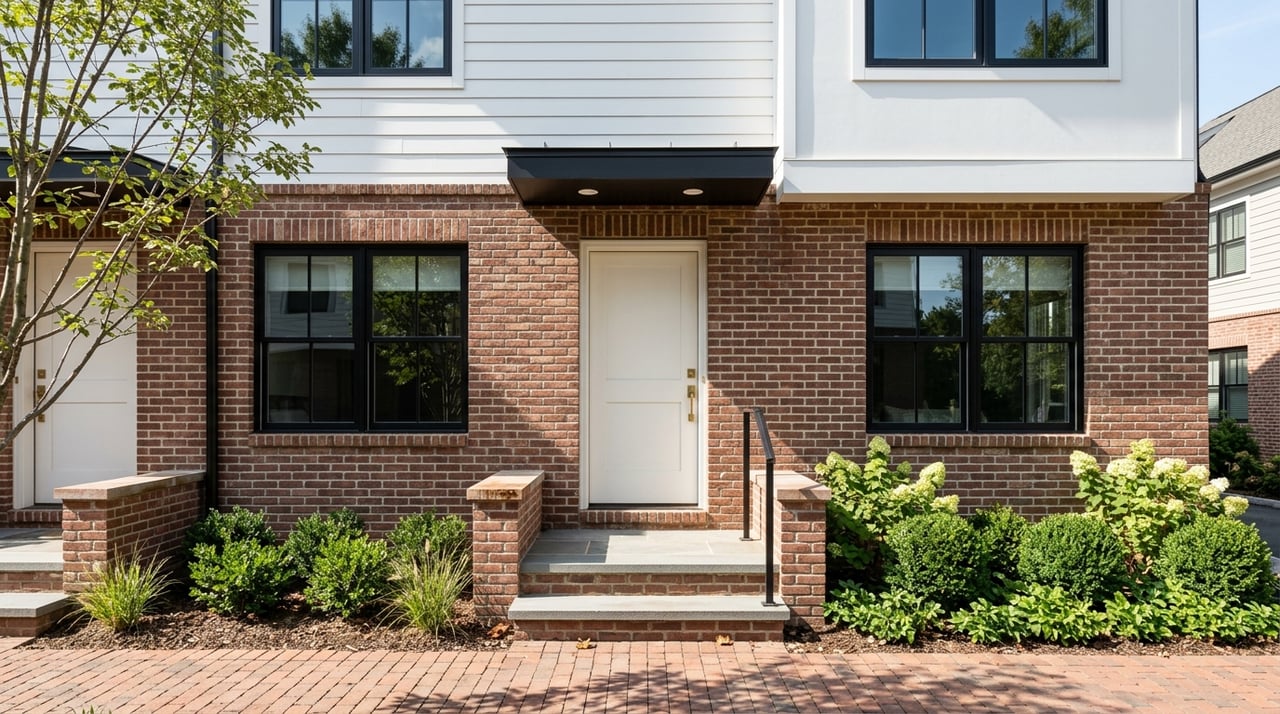
Condos and townhomes in Westfield can look very different from one community to the next, but a few features show up often in listing descriptions. Many buildings emphasize low-maintenance living and practical amenities that support a commuter-friendly routine.
You may see features such as:
- Elevator access
- Assigned or garage parking
- Heated underground garage space in some buildings
- One-level living in certain communities
- Private garage space in some townhomes
- Storage areas or generous interior storage
- Proximity to downtown Westfield and the train station
For example, current listing details mention Trinity Gardens with elevator access, assigned parking, and a heated underground garage. A townhome at 112 Cacciola Place is described as a 2019-built home with a private one-car garage and monthly HOA dues of about $315.
Condo vs. townhome in Westfield
Not every attached home works the same way. Some buyers assume condos and townhomes are basically interchangeable, but the ownership structure and maintenance responsibilities can differ.
In New Jersey, condo associations are responsible for maintaining common elements, collecting common expenses, and enforcing rules. Some fee-simple townhouse developments are set up differently, with owners maintaining the residential building while the association handles only defined common areas. That distinction can affect your budget, your responsibilities, and even how much control you have over exterior changes.
Here is a simple way to think about it:
| Type | Often appeals to buyers who want | Key thing to review |
|---|---|---|
| Condo | Lower-maintenance living, shared amenities, one-level options | What the HOA fee covers and what rules apply |
| Townhome | More separation and space, sometimes private garage storage | Whether the association or owner maintains the building exterior |
The lifestyle tradeoffs to weigh
Attached living can be a great fit if convenience matters more to you than yard space. In Westfield, that often means easier access to downtown, less exterior upkeep, and a potentially lower price point than a detached home.
The tradeoff is that you may have less autonomy than you would in a single-family house. Exterior changes, rentals, pets, and renovations may be limited by community rules. If flexibility is important to you, those details deserve close review before you make an offer.
Understanding HOA fees and monthly costs
A lower purchase price does not always mean a lower monthly cost. HOA or condo fees are a major part of the equation, and they are usually paid separately from your mortgage servicer.
These fees often help cover common-area expenses and, in some cases, master insurance. You still may need your own unit policy, depending on the ownership structure and insurance setup. The key is to calculate your full monthly housing cost, not just your principal and interest payment.
At one Westfield townhome listing, HOA dues were described at about $315 per month, with services including common-area maintenance, structure maintenance, snow removal, and trash. Other communities may include different items, so it is important not to assume all fees cover the same things.
What the monthly fee might cover
Every association is different, but buyers commonly want to know what they are actually paying for. In Westfield, the answer can vary widely by building and development.
Items that may be included are:
- Common-area maintenance
- Exterior or structure maintenance in some communities
- Snow removal
- Trash service
- Master insurance for shared elements
- Parking or garage-related common upkeep
The monthly fee should always be reviewed alongside the budget, insurance summary, and governing documents. A fee that looks low at first glance may not be a bargain if it excludes major maintenance obligations.
What to review before making an offer
This is where careful due diligence really matters. In condo and townhome purchases, the community documents can tell you as much as the property itself.
The highest-value items to review include:
- Master deed or declaration
- Bylaws
- Rules and regulations
- Current budget
- Reserve information or reserve study
- Insurance summary
- Meeting minutes
- Parking rules
- Pet rules
- Rental rules
- Any current or planned special assessments
These documents can help you answer the questions that most affect affordability and ease of living. You want to know not just what the home looks like today, but how the association is run and whether major costs may be coming.
Why reserves and assessments matter
A community’s financial health can have a real impact on your ownership experience. If reserves are underfunded, owners can face added costs later through special assessments or deferred maintenance.
That is why reserve levels, planned projects, and building finances deserve serious attention during your review period. Even if a unit seems move-in ready, weak association finances can change the math quickly.
Questions worth asking early
If you are touring a Westfield condo or townhome, asking the right questions early can save time and reduce surprises later. It also helps you compare communities more clearly.
Start with practical questions like these:
- What is included in the monthly fee?
- Is parking deeded, assigned, or shared?
- Who maintains the roof, siding, and exterior?
- Are there any current or planned special assessments?
- How strong are the association reserves?
- Are pets allowed, and are there restrictions?
- Are rentals allowed, and if so, under what rules?
- What does the master insurance policy cover?
These are not small details. They influence your monthly budget, your future resale options, and your day-to-day experience in the community.
Notable Westfield examples
Westfield offers a mix of attached-housing formats, which can be helpful if your needs are specific. Some communities focus on convenience near downtown, while others appeal to buyers looking for newer construction or one-level living.
For example, 260 Walnut Street townhome listings highlight storage and a location near Mindowaskin Park, downtown, and the train station. The Savannah at 111 Prospect Street is identified in Westfield’s master plan as a 35-unit condominium built in 2007 to meet senior housing needs near downtown, and current listing descriptions present it as a 55+ age-restricted option with one-level living.
These examples show why it helps to match the community to your lifestyle, not just your budget. A commuter, a first-time buyer, and a downsizer may all be looking at attached homes in Westfield, but they will not necessarily want the same thing.
Is attached living right for you?
If you value convenience, lower-maintenance living, and a location close to downtown Westfield and transit, a condo or townhome may be a strong fit. It can also be a practical option if you want to enter the Westfield market below the price of many single-family homes.
If you want more privacy, fewer rules, or more freedom to change the property, you may need to weigh those priorities carefully. The right choice usually comes down to how you want to live day to day, not just what looks best on paper.
A thoughtful buying strategy can help you compare buildings, understand true monthly costs, and avoid surprises in the document review stage. If you want help sorting through Westfield’s condo and townhome options, Joely Triantafyllou can guide you with a personalized, concierge-style approach tailored to your goals.
FAQs
What is condo living like in Westfield, NJ?
- Condo living in Westfield often appeals to buyers who want lower-maintenance ownership, a location near downtown and transit, and a lower entry price than many single-family homes.
What is the price range for Westfield condos and townhomes?
- Recent listing snapshots show Westfield condos around the mid-$300,000s to low-$600,000s and townhomes around $600,000 to the high-$700,000s.
What do Westfield HOA fees usually cover?
- HOA fees may cover items like common-area maintenance, snow removal, trash, master insurance for shared elements, and in some communities exterior or structure maintenance.
Are Westfield condos and townhomes near the train station?
- Many attached-housing options cluster near downtown and the rail corridor because Westfield Station helps anchor the town center.
What should you review before buying a condo in Westfield?
- You should review the declaration or master deed, bylaws, rules, budget, reserves, insurance summary, meeting minutes, parking rules, pet and rental rules, and any planned special assessments.
Are there age-restricted condo options in Westfield?
- Yes. The Savannah at 111 Prospect Street is identified as a 55+ age-restricted condominium community near downtown Westfield.
Who maintains the exterior in a Westfield townhome or condo?
- That depends on the ownership structure and community documents, since some associations maintain common elements or structures while some townhome owners maintain the residential building themselves.